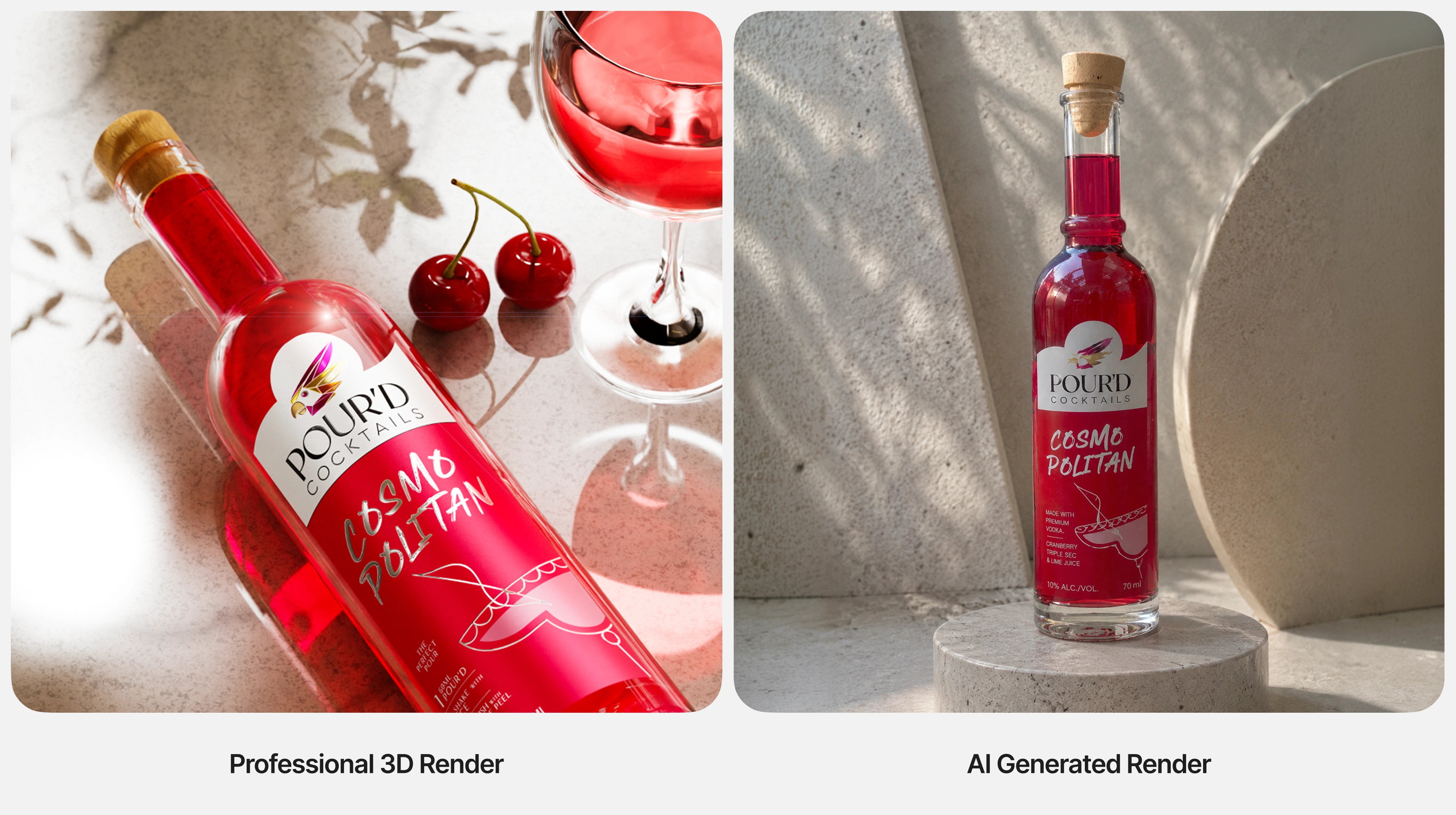
AI photography is everywhere right now. Brands are creating luxury product shoots, cinematic ads, creative environments, and high-end visuals within minutes. What used to take a full production setup, cameras, lighting, locations, and editing can now be generated with AI. Sounds perfect, right? Not exactly.
Most people think AI can instantly understand a product and generate realistic outputs from a few images. In reality, AI still has a limitation: it only works with what it can see and understand.
If you upload a normal phone image of your product and ask AI to create a premium campaign visual, the result often looks close but not accurate.
You might see:
Wrong product proportions
Distorted shapes
Missing details
Unrealistic textures
Packaging errors
Inconsistent branding
Because AI doesn't actually know your product. It only tries to predict what your product might look like. That's where the difference between a simple image and a detailed 3D mockup comes in.
A professional 3D model gives AI a complete understanding of your product every angle, every texture, every curve, every small detail. Instead of guessing, AI now has a structured reference to work with.
The result?
Instead of getting "AI-generated looking" images, you get visuals that feel almost indistinguishable from real photography.
Imagine turning:
A simple phone picture into Premium ad creatives, cinematic product shots, social media campaigns, lifestyle visuals, and highly realistic AI-generated content.
At Abox, we help bridge that gap.
We create detailed 3D product mockups designed specifically for high-quality AI workflows. So when AI creates your visuals, it isn't imagining your product it's building from an accurate foundation.
Because AI is powerful. But better inputs create better outputs. And sometimes the difference between an average AI image and a realistic one is not the AI itself.
It's the product model behind it.